It is a historical coincidence but a nevertheless instructive one. We observe the 30th anniversary of the initialing of the Dayton Peace Agreement, just as the Trump administration mounts a major pressure campaign on Ukraine to agree to a peace deal largely shaped by Moscow’s representatives.
Lessons from an Unjust Peace: Bosnia 1995 and Ukraine Today
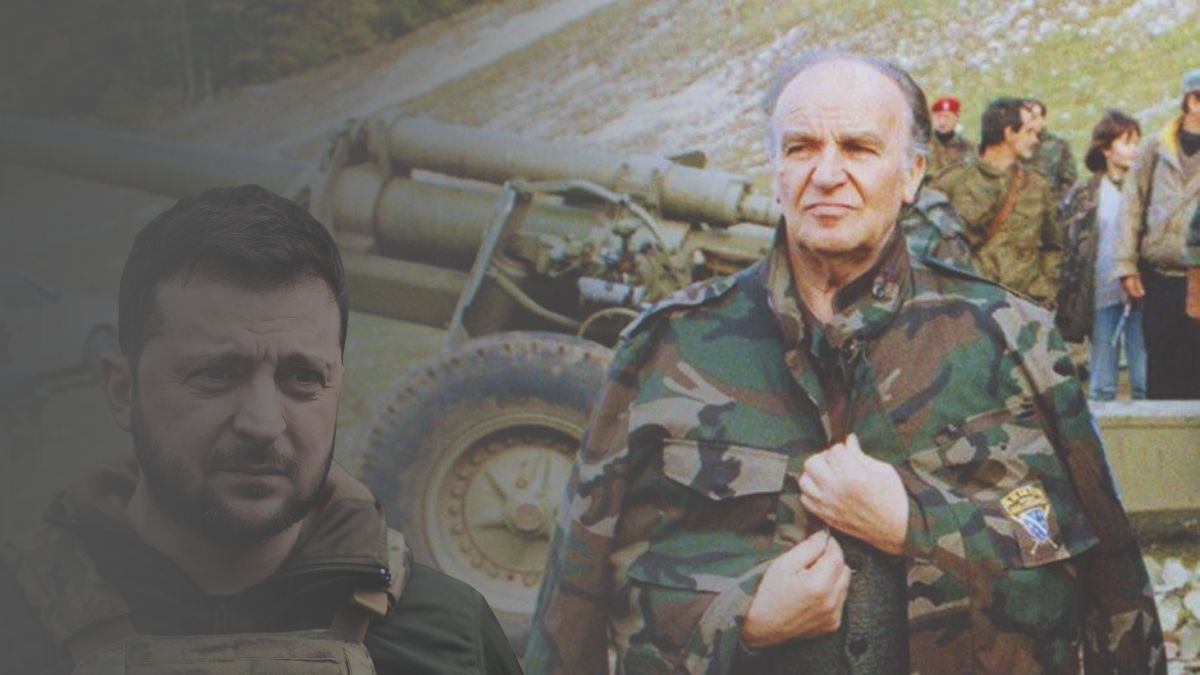
Čovjek koji bi Zelenskom mogao dati najbolji savjet umro je 2003.
Jasmin Mujanović
29.11.2025. 04:18
Ovaj članak dostupan je i na bosanskom jeziku
Very few people on Earth can appreciate the weight on Volodymyr Zelenskyy’s shoulders in these fateful hours. One of the very few who might have given him informed counsel passed in October 2003.
In the nearly four years of aggression against Bosnia and Herzegovina, which at its height saw the country functionally invaded by both Serbia and Croatia, which jointly pursued its partition, the government in Sarajevo and the Army of the Republic of Bosnia and Herzegovina received zero Western military aid. The comparatively robust international peacekeeping presence in the country, UNPROFOR, only observed the widespread atrocities against the civilian population, typified by DUTCHBAT’s surrender of the Srebrenica “safe area” to Ratko Mladic’s genocidal Army of the Republika Srpska (VRS) in July 1995. When NATO finally intervened militarily, it did so only at the margins of the conflict, and only to achieve the desired 51-49 split in territory which the International Contact Group had established as its desired outcome to the war nearly two years earlier.
In contrast, Ukraine has received significant – indeed, enormous – military aid from the West since 2014, and especially since February 2022. By some estimates, the total monetary figure for the military aid Ukraine has received just since February 2022 is approximately $150 billion, which includes some of the most sophisticated weapons systems in the collective NATO arsenal. And European leaders, much as the former Biden administration, speak of Ukraine’s defense against Russia’s aggression as an existential struggle for the future of the continent, the EU, and NATO.
Granted, the geopolitical significance of Ukraine to the West, as compared to the relative irrelevance of Bosnia and Herzegovina and the entire Western Balkans, is difficult to overstate. But the point is to not lament the indifference of Europe and the United States to Bosnia’s plight in the 1990s. In fact, it is to recognize it explicitly.
Neither Europe nor the United States saw the aggression against Bosnia and Herzegovina, nor the broader dissolution of Yugoslavia, as a priority. As then Secretary of State James Baker (in)famously put it, the United States had “no dog in that fight”. Or as French and British officials told President Clinton, Bosnia did not belong in Europe – i.e. the Bosniak Muslims did not belong in Europe – and thus the genocide against them amounted to the “painful but realistic restoration of Christian Europe”.
This was the historical context in which the Bosnian delegation entered into the negotiations at the Wright Patterson Air Force Base in Dayton, Ohio.
By the autumn of 1995, the battlefield situation had begun to shift decisively against the VRS but Croatia’s commitment to the alliance with Bosnia and Herzegovina was hardly secure. The para-criminal Herceg-Bosna regime had been defeated by the Bosnian forces but Franjo Tudjman – as he continued to make explicit even after the war – still viewed Bosnia and Herzegovina as a historical mistake, a territory which rightfully deserved to be divided between Greater Croatia and Greater Serbia. Perhaps the combined Bosnian and Croat(ian) forces might have been able to enter Banja Luka; they were only 20km outside its center, famously. But would Milosevic have (re)deployed the full Yugoslav military across the Drina then? Would Tudjman, once more, tear up his promises to Sarajevo?
The possible questions and scenarios are legion had the Bosnian delegation and, first and foremost, President Alija Izetbegovic not agreed to the peace deal offered and guaranteed by the Americans in November 1995. This is not to suggest that Dayton, as such, was a flawless document. Far from it.
It is possible some (minor) alterations to the deal offered at Dayton may have been possible. Richard Holbrooke, for instance, regretted allowing Milosevic to walk out of Dayton with the “Republika Srpska” name preserved. But that was an American regret, and it is not clear the Bosnian side could have convinced the Clinton administration to pressure Belgrade to abandon it. As it is, Izetbegovic waited for as long as he believed he could and then he told the Americans, on American soil, it is not a just deal – but my people need peace.
That peace, for all its myriad flaws, preserved the sovereignty and territorial integrity of Bosnia and Herzegovina. It secured the reunification of the capital, and the reconstruction of the country. Refugees could return to their homes; most did not, many did. And eventually, it was again possible to travel from Sarajevo to Trebinje, Banja Luka to Tuzla, Bihac to Mostar, without passing a dozen armed check points, and without risking one’s life.
The Dayton constitution is discriminatory and illiberal, but its provisions can be contested, and its core aspects have already been struck down by the European Court of Human Rights thanks to the appeals of Bosnian civil rights activists. Bosnia and Herzegovina is an EU and NATO candidate state, and if it ever joins those international blocs, it will only do so after its sectarian constitution has been amended in line with the European Convention on Human Rights and the opinions of the Venice Commission.
History is cruel, geography crueler still. For all the support Ukraine has received from the West, its cities still burn, its people are killed by the hundreds every day, and the murderous Russian war machine marches on. This American president demands peace, even if it is on the Kremlin’s terms. And Ukraine’s leaders, like Bosnia and Herzegovina’s in 1995, must make a choice. They can try to massage the details, but ultimately, they must choose whether to say yes or no to Washington. And then deal with the consequences of that choice.
Consider, however, that five years after Izetbegovic said yes to Dayton, another beleaguered leader at an American-hosted peace summit in the United States said no. His name was Yasser Arafat. Judge the wisdom of their respective answers for yourself.
O autoru

Jasmin Mujanović
Jasmin Mujanović je bosansko-američki politolog, autor nekoliko knjiga.
Više od istog autora