Edward P. Joseph, an adjunct professor at the Johns Hopkins School of Advanced International Studies, told the portal !Odgovor that Donald Trump’s son-in-law halted a major investment in Belgrade due to widespread public opposition, political scandals, and a location highly conducive to protests. He added that Vučić’s government was also unable to fulfill the commitments required to carry out the investment.
Edward Joseph for !Odgovor: Vučić Is a Weakened and Unreliable Partner
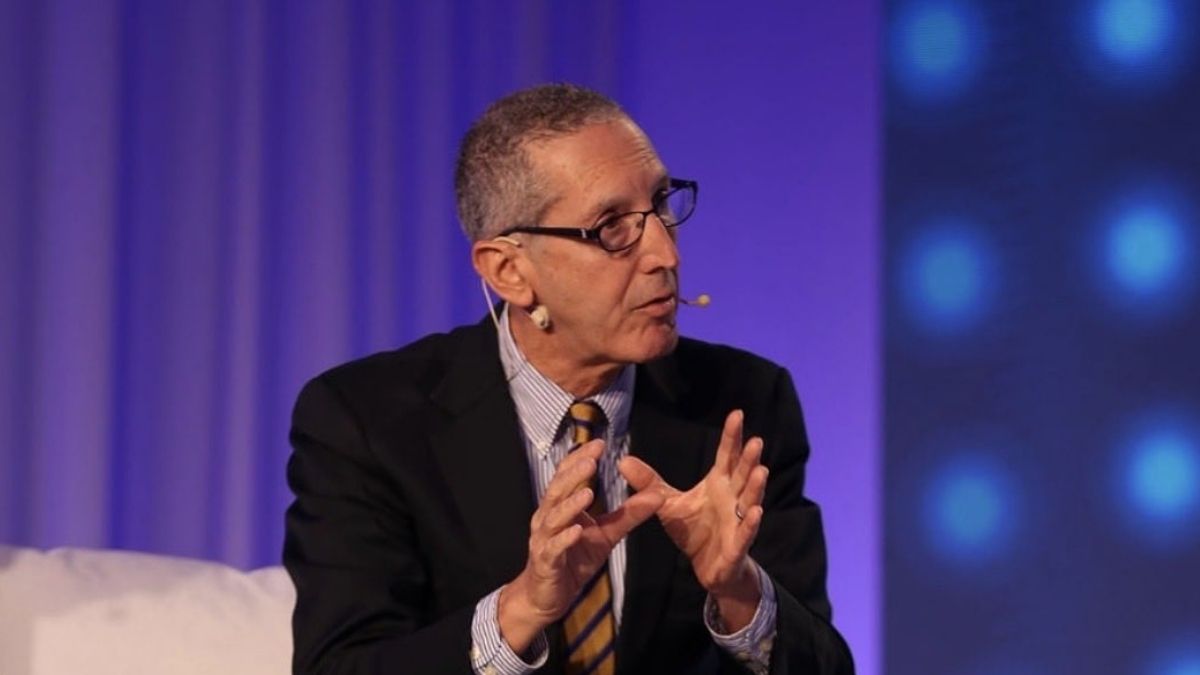
Edward P. Joseph at the international To Be Secure (2BS) forum in Budva, Montenegro, October 4, 2025.(Foto: @edwardpjoseph/X.com)
Adem Dedić
18.12.2025. 19:00
The investment company Affinity Partners, founded by Trump’s son-in-law Jared Kushner and United Arab Emirates billionaire Mohamed Alabbar, planned to build a luxury hotel-residential complex branded as Trump on the site of the former General Staff, which was destroyed in NATO’s 1999 bombing.

Investigations and Allegations of Forgery Drove Investors Away
Since 2024, Serbia has seen intense debates over the legal basis for granting a 99-year lease of the heavily damaged General Staff complex, which holds protected cultural heritage status, to a foreign company.
Despite strong opposition from parts of the public and the professional community, the government insisted the project was of national importance. Serbia’s parliament, where President Aleksandar Vučić’s Serbian Progressive Party (SNS) holds a majority, adopted a special law enabling construction in an area containing protected cultural heritage sites.
This was followed by a scandal involving the falsification of documents required for construction, in which Culture Minister Nikola Selaković was also implicated.
After the company owned by Trump’s son-in-law officially announced its withdrawal from the project, Serbian President Aleksandar Vučić stated that the country had “lost an exceptional investment” and announced criminal complaints against the police, the prosecution, and other institutions.
Vučić Unable to Deliver on His Promises
Professor Joseph, who testified earlier this month before the U.S. House Foreign Affairs Committee in Washington, explained to !Odgovor the reasons behind the failure of the investment.
“It is becoming increasingly clear that, from a business perspective, the Trump hotel project in Belgrade was not viable. I pointed to the widespread opposition to the project and emphasized that the location, directly opposite the main government building, was tailor-made for protests,” Joseph said.
He added that in his written testimony he also addressed the circumstances surrounding the adoption of the so-called lex specialis (special law), as well as the ongoing scandal over dubious attempts to remove the General Staff building from the register of protected properties.
“And, above all, I emphasized that after a year of sustained public protests, President Vučić is no longer able to deliver on what he committed to. Rio Tinto has just shut down the Jadar lithium project, so I am not at all surprised that Jared Kushner shut down the hotel project,” Joseph told !Odgovor.
Transactional Politics Require Two Sides
Joseph believes this move reflects an increasingly realistic assessment of the Serbian government by the U.S. administration.
“My key point is this: the so-called transactional approach to foreign policy does not work if the other party (in this case, Belgrade) is unable to complete the transaction. U.S. interests, including those of investors, lie in recognizing that Serbia’s government is in serious trouble. President Vučić continues to deepen relations with China and still hesitates to nationalize the Serbian oil company NIS, which is Russian-owned,” he concluded.
He stressed that the NIS issue is currently central to Serbian-American relations.
“As the U.S. Embassy in Belgrade has stated, ‘Serbia is at a crossroads.’ President Vučić should now move forward with nationalizing NIS, regardless of what the Russians say,” Joseph said.
Three Critical Russian Pressure Points
Joseph also pointed out that the regional implications of this move are extremely significant.
“If Washington finally and fundamentally changes the way it views Serbia and recognizes that Vučić is a weakened and unreliable partner, then there is the possibility of real change. It begins with nationalizing NIS, but it does not end there. Belgrade must: first, shut down the Russian propaganda outlets it hosts — RT and Sputnik; second, begin applying EU sanctions on Russia; third, close the so-called Russian Humanitarian Center in southern Serbia,” he said.
Finally, he emphasized that the Trump administration must understand that there will be no lasting peace and stability in the Balkans without clearly moving Serbia toward the West.
“And that means finally resolving the dispute with Kosovo. As I explained in my recent SAIS Review article, President Trump can end the stalemate by providing a path to NATO membership for Serbia and Kosovo,” Joseph concluded.
O autoru
Adem Dedić
Novinar portala !Odgovor. Prati političke i društvene teme u Bosni i Hercegovini.
Više od istog autora