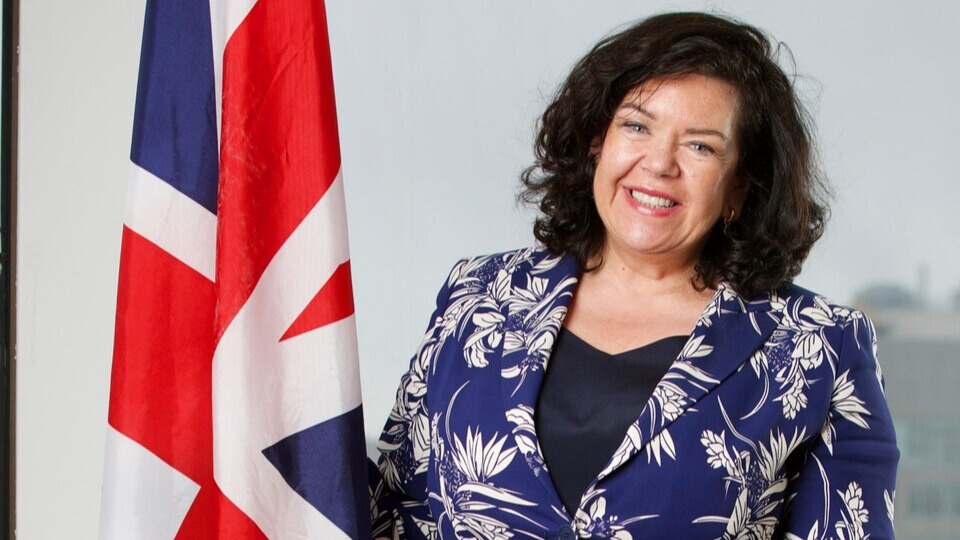
Dame Karen Pierce is one of the United Kingdom’s most experienced diplomats and the current UK Special Envoy for the Western Balkans. Throughout her career, she has held several key positions, including serving as the British Ambassador to the United States and as the UK’s Permanent Representative to the United Nations. Pierce is known for her long-standing engagement in international security, multilateral diplomacy, and European affairs, making her one of the most influential voices in British foreign policy on Bosnia and Herzegovina and the wider region.
UK Envoy Karen Pierce: Bonn Powers Still Important for Stability and Security
Mirza Čubro
23.11.2025. 04:42
!Odgovor: Last month, the UN Security Council discussed the situation in Bosnia and Herzegovina based on the report of the High Representative of the international community for BiH. How do you assess this discussion, and do you believe there has been a change in the international community’s approach towards Bosnia and Herzegovina?
Last month’s unanimous adoption of the UN Security Council resolution, under Chapter VII of the UN Charter, sends an important message. It was a clear affirmation by the international community to maintain support for Bosnia and Herzegovina, its sovereignty, territorial integrity and security, and underscored the continued need for international military presence to safeguard peace and a safe and secure environment. And it was a clear recognition of the continuing relevance and importance of the GFAP and subsequent agreements, 30 years on from the signing of Dayton, and the structures provided by these, including the High Representative and his office and powers.
Vital and Legitimate Role of the High Representative
!Odgovor: The representative of the United Kingdom reiterated support for the Office of the High Representative in BiH and the use of the so-called Bonn Powers. Is there sufficient support within the international community for the UK’s position on this matter?
Yes. Since 1995, the UN Security Council has repeatedly endorsed the High Representative’s mandate to interpret civilian implementation of the Dayton Agreement in multiple resolutions under Chapter VII. These are legally binding on all States, and all the parties to Dayton, and include the power to make binding decisions and be the final interpretation of the non-military aspects of Dayton as he judges necessary.
The recent political crisis in Bosnia and Herzegovina reinforces the ongoing vital and legitimate role of the High Representative and the importance of the Bonn Powers in ensuring the stability and security of Bosnia and Herzegovina.

!Odgovor: Does there currently exist a unified stance and policy within the international community—excluding Russia and China—regarding Bosnia and Herzegovina and the key priorities for this country?
Yes. There is broad and strong international support for the territorial integrity and sovereignty of Bosnia and Herzegovina, and the need to enhance security, stability and prosperity throughout the country. There is strong agreement that greater Euro-Atlantic integration remains the best prospect for reform and progress. The Peace Implementation Council Steering Board, which was established under Dayton, meets regularly to discuss the issues, and support the High Representative; it remains united in upholding the Dayton Peace Agreement in support of these goals. It was Russia’s choice to stand down from the Steering Board.
We Support Regional Cooperation and Connectivity
!Odgovor: What are the main foreign policy priorities of the United Kingdom towards Bosnia and Herzegovina and the other Western Balkan countries?
The UK’s partnerships across the Western Balkans are vitally important to our shared security and prosperity. What happens in the Western Balkans affects the whole of Europe, which is why the UK was proud to bring together Western Balkans and European partners as we hosted the Berlin Process this year.
Our focus at October’s Ministerial meetings and the Summit was on addressing vital issues that matter to all Bosnia and citizens: including supporting peace and reconciliation across the region by drawing on our own experiences in Northern Ireland, strengthening resilience to security threats, including from Russia, tackling the shared problem of illegal migration and promoting opportunities for economic growth.
And we had some highly positive outcomes, with all Western Balkans countries reaffirming their commitment to advancing peace efforts through the Hillsborough Castle joint declaration on good neighbourly relations, including greater co-operation on Missing Persons. New funding and access to specialist cyber training and an extension to the UK’s leading role in NATO’s KFOR will support regional resilience and security for years to come. And new commitments to support women into work, including more in leadership roles, will promote gender equality, which is an integral part of modern, inclusive societies.
We fully support the Berlin Process’s goal to support regional cooperation and connectivity across the Western Balkans, and help to accelerate its chosen ambition for closer European alignment and EU accession. We believe that by building long-term stability and prosperity in the Western Balkans, we can create a better future for its people and strengthen the security of our continent as a whole.
Our Sanctions Remain in Place
!Odgovor: Do you believe there has been, or that there needs to be, a significant change in the policies of Milorad Dodik and the SNSD, which led to the lifting of U.S. sanctions? And do UK sanctions against these political figures remain in place?
The US have set out their reasons for lifting US sanctions.
The UK’s sanctions regime has a specific purpose: to hold to account those engaging in action which undermines the sovereignty, territorial integrity, and constitutional order of Bosnia and Herzegovina.
UK designations are made after careful consideration, but they are not punitive and could be lifted if the reasons for their imposition are no longer present. Currently, those conditions under the UK’s sanction regime have not been met, and our sanctions remain in place.
!Odgovor: Is there a clear commitment within NATO to admit Bosnia and Herzegovina into the Alliance, and do you believe that the domestic authorities are capable of meeting the necessary requirements for membership?
The Western Balkans remains high on NATO’s agenda, and I welcome the recent adoption of the Individual Tailored Partnership Package with Bosnia and Herzegovina when all three Presidency members were Brussels last month. There is strong support among NATO members for Bosnia and Herzegovina but it is ultimately for Bosnia and Herzegovina’s political leaders to take responsibility and set the pace of its journey towards NATO in the interest of all Bosnia and Herzegovina citizens.

High Representative Did Not ‘Suspend’ Federation Constitution
The UK continues to support Bosnia and Herzegovina through our own bilateral defence cooperation, providing expertise and training to support the alignment of its armed forces with NATO standards.
We’re clear in our view that a stable and secure Bosnia and Herzegovina and a peaceful Western Balkans are in our strategic interest.
!Odgovor: What is your opinion on the involvement of certain members of the international community in the process of forming governments in BiH? After the last elections, for example, the High Representative temporarily suspended parts of the Federation of BiH Constitution to enable the appointment of the current government.
It is not true that the High Representative suspended the Federation Constitution. He used his Bonn Powers to impose significant changes to the Election Law and to amend the Constitution. This is permitted under Dayton and subsequent agreements, backed by Chapter VII UNSCRs. The High Representative’s action was aimed at improving the functionality of the Federation and preventing political deadlock; the High Representative takes decisions in the interests of all Bosnia and Herzegovina’s citizens. That included, for example, restructuring the House of Peoples and altering the process for electing the Federation’s president and vice-presidents.
O autoru
Mirza Čubro
Saradnik portala !Odgovor. Kao novinar je radio za „Večernje novine“, „Nezavisne novine“, „Jutarnji list“ i „Globus“ te sarađivao s nizom regionalnih medija. Bio je urednik TV1 i urednik vijesti na Aljazeera Balkans. Autor je knjige o novinarima, domaćim i stranim, ubijenim tokom agresije na Bosnu i Hercegovinu.
Više od istog autora