Sarajevo Has Only Itself to Blame for America’s Shift on Dodik
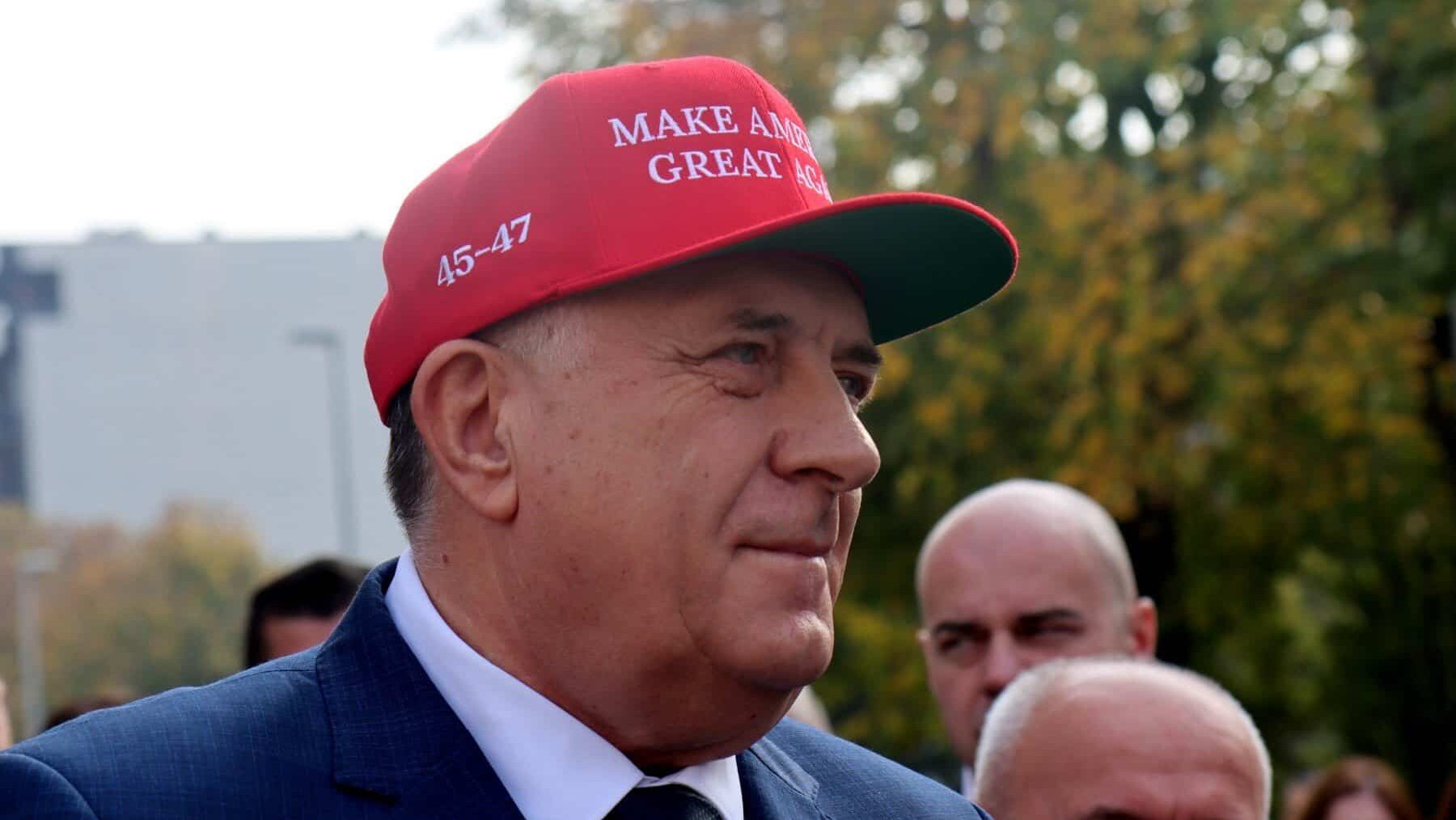
Foto: X
Jasmin Mujanović
26.10.2025. 04:56
Sarajevo is aghast. The Trump administration appears to be moving towards lifting all US sanctions against the secessionist authorities in Banja Luka, including Milorad Dodik himself. Even worse might be the litany of incendiary social media posts by hugely influential American far-right influencers targeting BiH and leading political figures in Sarajevo, and all this too at the behest of Dodik and his regime.
The sense of betrayal and frustration among Bosnian officials is palpable. How could this happen? How could the Americans do this to us?
The formulation of these and similar complaints, heard throughout Sarajevo political circles these days, themselves answer the question.
The fault is not in the US. It is in Sarajevo, and the great majority of Bosnian and Bosniak politicians who believe America – and the world – owes them political and security commitments, for which they offer no compensation, and make no effort to justify.
It was eight years ago that Dodik publicly admitted that he had spent approximately $30 million lobbying US officials for the various political ends of his regime. Since then, that figure is likely to have doubled, if not tripled. Moreover, Dodik has in the interim also hired lobbyists in the UK, and one assumes in capitals like Brussels, Berlin, Budapest, and Vienna as well.
What have “pro-Bosnian” leaders done during this time? Here are two instructive excerpts from the international press:
“European prosecutors… identified six people — including three Bosnian public officials — as suspects in a cross-border corruption scheme linked to the construction of an EU-funded highway”.
“[Bosnian] prosecutors say [Edin Gacanin’s] cartel has attempted to take over the state itself by paying off politicians while working with the head of the state security services and by laundering money internationally.”
So, while Milorad Dodik and his regime are investing tens of millions of dollars to reorientate US policy in their favor, with the eventual aim of destroying BiH as a sovereign and territorially unified state, key officials in Sarajevo are working hand in hand with transnational organized crime to decimate what little remains of the institutional efficacy of the state.
In the interim, the governing coalition in Sarajevo also decided to allow Dodik control of the Security Ministry, the state police (SIPA), and the border police, while appointing to the leadership of the handful of remaining key security offices in the country, such as the Ministry of the Interior of the Federation entity, some of the most unqualified individuals who have ever held public office in modern European history.
It is the height of absurdity for anyone in Sarajevo, especially those who have spent decades in the country’s politics, to complain about any shift in US or European policy towards BiH, when they themselves demonstrate such brazen disregard, such outright hostility to the welfare of their own country, and their own citizens.
Every single meaningful conversation about the shifting attitudes of US or EU officials towards BiH must begin by addressing what, if anything, has been done by Sarajevo to influence those views. If the answer is “nothing” or “very little,” as is the case most of the time, then the key problem is not in Washington, or Brussels, or Banja Luka, Belgrade or Zagreb. The chief problem is in Sarajevo. It is among Bosnian political leaders and their advisors, who either do not know how or do not care to learn how to engage in the craft of diplomacy and public relations.
Mr. Trump will be in office for another three years. His Republican Party, at minimum, will control the US Congress for another fourteen months. The Trump administration has made its theory of foreign policy patently clear. The American electorate will decide whether it endorses this view at the 2026 midterm elections, and the 2028 presidential elections.
The Bosnian public and their representatives may have whatever view they wish of the White House’s policies and general ideological bent. But unless they are willing to deploy diplomatic and commercial resources to reshape these views in their own interest, their views are irrelevant.
In contrast, Dodik, whose entire political project is categorically at odds with core US strategic interests in Europe, deployed his resources systematically and won significant concessions from Washington. It took him nearly a decade, and he suffered major setbacks in process, but he has realized major portions of his agenda.
If decisionmakers in Sarajevo, whether in government or in opposition, still do not understand these basic, elementary facts of politics and diplomacy, it is unlikely that BiH has much of a future. At least a future that will be determined by those who claim to be its “patriots”. Its future will instead be shaped by men like Dodik.
Dr. Jasmin Mujanović is a Senior Non-Resident Fellow at the New Lines Institute and the author of the books “Hunger and Fury: The Crisis of Democracy” and “The Bosniaks: Nationhood after Genocide”.
O autoru

Jasmin Mujanović
Jasmin Mujanović je bosansko-američki politolog, autor nekoliko knjiga.
Više od istog autora