The historic triumph of the Democratic Party in the 2026 U.S. midterm elections is as much an American political earthquake as it is a potential global bellwether. The same anti-incumbency wave that propelled a string of anti-establishment candidates in 2024 has now, two years later, begun to turn in the opposite direction: in Hungary, Serbia, Israel, Brazil, and now the United States, voters have largely opted for moderation over radicalism. And at the level of individual issues, affordability and rule of law have featured prominently in each of these elections, though each, naturally, has had its own local expression.
What the American Midterms (Do Not) Mean for Europe
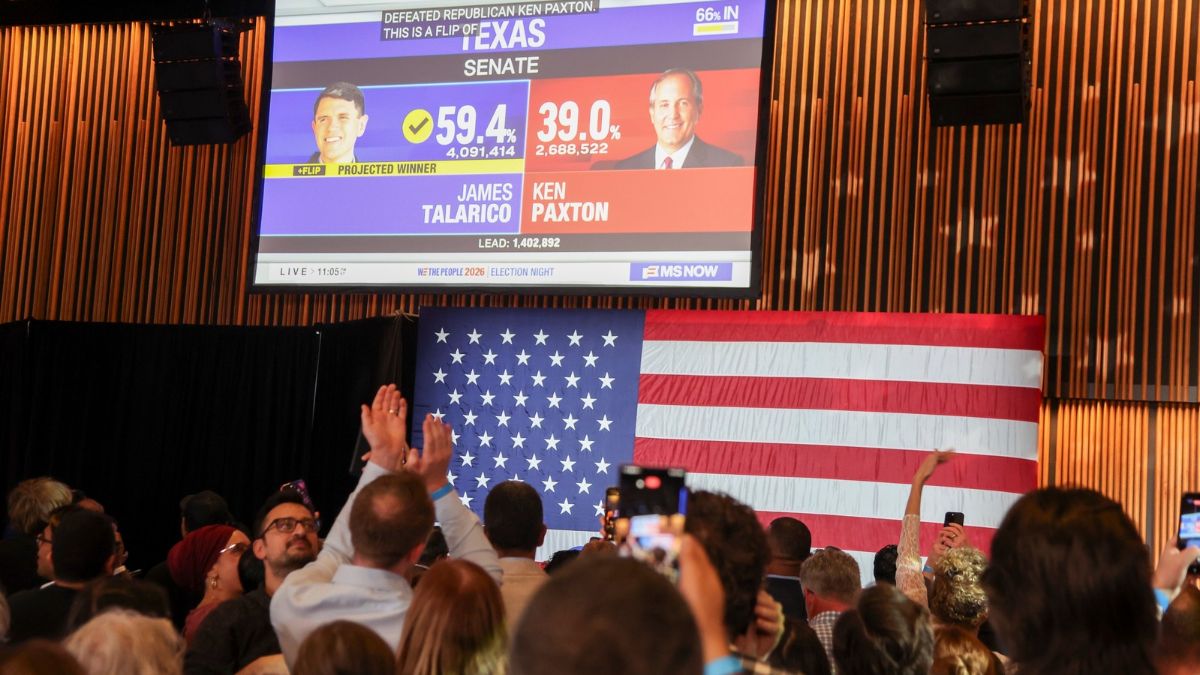
Attendees react as Texas US Senate election results are reported during the Michigan Democrats' election night watch party in Detroit, Michigan, USA, 03 November 2026 (issued 04 November 2026). The 2026 midterm elections will determine congressional control and shape the final two years of President Donald Trump's term. EPA/SARAH YENESEL
Jasmin Mujanović
04.11.2026. 19:16
Yet despite the weighty implications of each result, and the ejection of at least two quasi-autocratic regimes, the average difference between the winning and losing sides in each of these elections was less than 10 percentage points, and in many cases less than five, if we account for individual races in the respective legislatures. Granted, the Democrats appear to have won by the largest popular vote difference since Watergate, besting Republicans by about 13 percentage points nationally.
But that is one election cycle in half a century, and one largely concerning the administration of a historically unpopular president. One should not overstate the result and remain especially suspicious of talk of a ‘realignment’ in American politics.
In other words, what Americans call swing voters – those willing to change their minds from one electoral cycle to the next – can significantly affect the outcomes of races. And they can be instrumental in delivering electoral ‘waves’ too. But the resulting shifts are usually modest all the same. Certainly, in the most decisive races on Tuesday, the winning margins were comparatively narrow.
This is not to diminish the significance of the Democrats’ accomplishments, any more than it is to question the significance of the Tisza or Student List victories in Hungary and Serbia. Instead, it is to warn against euphoria, and appeal to the reason of those who have campaigned and triumphed, in part, on the restoration of democratic integrity and the rule of law. Pursuits that should animate all free people.
James Carville, the Democratic strategist seen as the architect of Bill Clinton’s victorious presidential campaign in 1992, famously quipped of the former Arkansas governor’s White House bid that “it’s the economy, stupid.” That is, the concerns of voters are fundamentally narrow. In most consolidated democratic regimes, if voters feel economically secure, they are willing to entertain a few more issues as possibly relevant to their vote, and able left- and right-wing candidates can shape these to one extent or another.
If, however, voters feel economically insecure, even despondent, then there are few ideological commitments that can avert their rebuke of those they hold responsible; typically, those in power. Hence the historic performances of Democrats on Tuesday in deeply conservative states like Texas, South Carolina, Iowa, Kansas, and Mississippi. That dynamic cut against Republicans this time around. In 2024 it cut just as sharply against Democrats.
If the Democratic Party hopes to build on this success in 2028 by maintaining control of Congress and electing the next president, it will have to double down on its present course. Namely, putting middle-class economic interests first, and framing the defense of the rule of law and constitutional government through that prism. Ironically, the party will have to, in effect, seize (on its own terms) President Trump’s purported agenda since 2016: “America First” and “drain the swamp.”
For those in Europe concerned with the overall direction of American foreign policy, this matters as well. Europeans should not assume that the midterm results will mean an automatic reset of transatlantic ties, even if a Democrat wins the White House in 2028. Restoring any semblance of the old Atlantic order will require Europeans to make a compelling case to officials in Washington, and American voters, that they will benefit from the lowering of tariffs and the restoration of free trade.
Europeans must also remain committed to providing for their own security needs. The era of offshoring national defense to the United States is over, by bipartisan consensus. There may be segments of the American political establishment that would still welcome a Europe that is a military featherweight, but their remaining influence is negligible. American voters – the most important factor in the country’s politics – have become exceedingly wary of the country’s overseas commitments. European decision-makers must act accordingly.
For those in the Western Balkans, and perhaps above all for Bosnia and Herzegovina, which has found itself at the center of the Trump administration’s regional policy pivots, these elections are an opportunity. But no more than that.
For Sarajevo, the overriding priority must be the restoration of American sanctions against Milorad Dodik and the SNSD regime in Banja Luka. Although it is not impossible that they might be restored under the lame-duck Trump presidency, it is far likelier that the decision will fall to the next president. Regardless, any hope of securing sanctions restoration will require sustained engagement with Congress, among Democrats and Republicans alike, and explaining in great detail why it is in America’s interests, first and foremost, to re-impose sanctions on Dodik, to recommit itself to the integrity of the Dayton Peace Agreement, and to work toward meaningful political reform in the country beyond that. That means that Sarajevo must itself have a clear vision of these objectives, one that, ideally, is shared by government and opposition alike.
Americans have made their choice. They will continue to choose, and the Republican Party will, sooner or later, have another crack at a congressional majority, and another representative in the White House. As will Democrats. What will remain unchanged, however, is the primacy of America’s own welfare. That is what determines elections in the United States – and everywhere else too. Those who seek to benefit from America’s friendship must come with offers in hand, not demands.
O autoru

Jasmin Mujanović
Jasmin Mujanović je bosansko-američki politolog, autor nekoliko knjiga.
Više od istog autora