The defining feature of 21st century international relations with respect to the foreign policies of the major powers can be summed up as 'catastrophic miscalculation'. That is, decisions of enormous weight taken with little or at least insufficient attention paid to the possible adverse consequences of the same. Consequences which then, in short order, manifest themselves, and cannot be managed by decision-makers, nor fully comprehended by their public(s).
Small States in the Era of Great Power Implosion
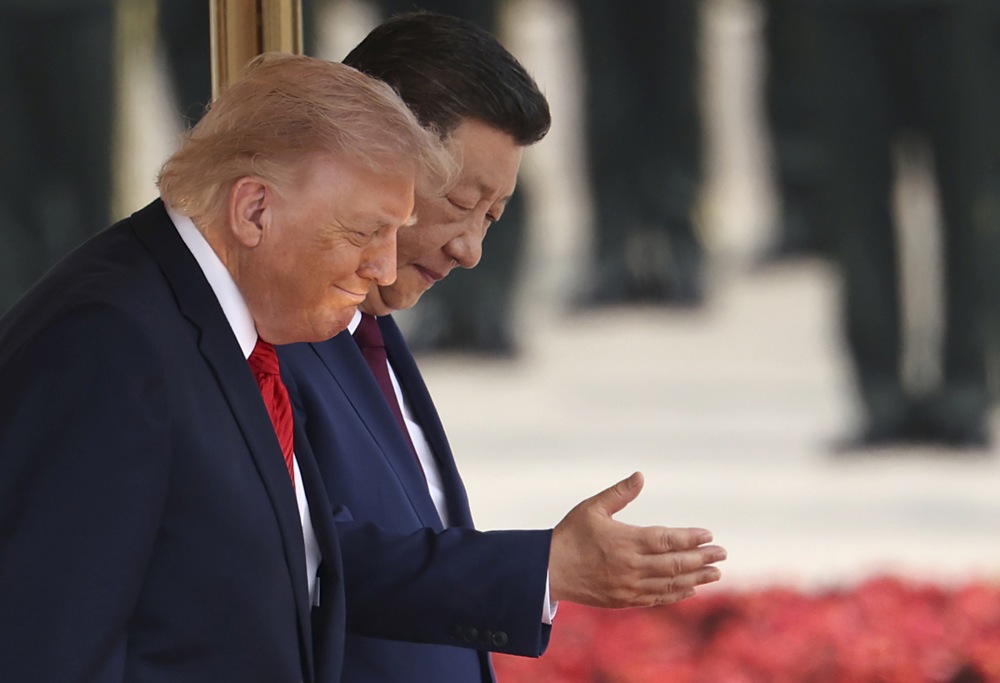
Trump i Xi u Kini. (Foto: EPA)
Jasmin Mujanović
17.07.2026. 17:07
The U.S. decision to invade Iraq; the EU decision enlarge its membership without a functional foreign policy apparatus; the United Kingdom’s decision to exit the EU; the Russian decision to invade Ukraine, twice. Most recently we might add the U.S. decision to pursue armed confrontation with Iran, apparently without having fully anticipated the capacity of Tehran to both hold the global economy hostage via its shutdown of the Strait of Hormuz, and now bizarrely finding itself in the position of being more eager to conclude the altercation than the Iranians, who have nevertheless suffered the brunt of the material losses.
Even China, which has to date seemingly avoided the same temptations as its great power competitors, has orientated nearly its entire security and military apparatus towards the seizure of Taiwan. Can China militarily seize Taiwan? Probably. Can it then govern Taiwan, perhaps the most liberal and democratic polity in Asia? Not without extraordinary repression and violence. To say nothing of the consequences to the global economy of disrupting through an unnecessary war the central semiconductor manufacturing workshop in the world.
In other words, rather than China having avoided the mistakes of its competitors and adversaries, Beijing appears simply not yet to have joined them in these pursuits.
Who Will Pick Up the Pieces
This is evidently a pattern of behavior at this point. Its exact origins are unclear and as with any phenomenon of this scale there are certainly multiple factors at play. For instance, the rise of social media and hitherto unknown speeds and simplicity by which disinformation and propaganda spread. The hollowing out of the Western middle class, and the rise of labor precarity. The extraordinary expansion of public and consumer debt, and the ensuing pressures on labor markets, pension regimes, and education systems. A general but clearly observable drift towards anti-intellectualism across the West and its supplanting by the politics of cheap populism, chauvinism, or what some contemporary social theorists have labeled “kakistocracy”.
Whatever the cause, the result is the same.
Every major Western, liberal-democratic power or bloc is in a more vulnerable strategic position today than it was at the start of the century. Russia is too, and whatever the contemporary status of the battlefield in Ukraine, a cataclysmic regime collapse scenario in Moscow, akin to similar episodes in 1917 and 1991, appears inevitable. China’s trajectory is perhaps the most difficult to discern but if – as all indicators suggest – the communist regime is committed to forcing itself upon Taiwan’s democracy, the likeliest outcome is China’s own instability as well.
The question then is not ‘who will be left to pick up the pieces?’ as presently the entire configuration appears most reminiscent of the litany of historical conflicts in which even the proverbial victors were left weaker for having participated at all. That, at least, is the likeliest interpretation Thucydides would take, contra his frequent mangling by China’s autocrat Xi Jinping. There will be no winners here in the near term, at least among the current configuration of major international actors, only losers.
This raises a conundrum not just for Prime Minister Mark Carney’s famed “middle powers” but smaller states still. If the existing international and institutional order is collapsing, and may implode entirely within our lifetime, what are minnows to do?
Serbia's Calculations in te 20th Century
In regions like the Western Balkans, the traditional response to such historical episodes – which I explored at length in my 2018 book Hunger and Fury – has been to shift allegiances to new imperial benefactors. That most absurd illustration of such reactionary behavior is best illustrated by the Serbia’s actions in the period between 1912 and 1918.
During the First Balkan War, Serbia sided with Greece, Bulgaria, and Montenegro (the so-called Balkan League) to push out the waning Ottoman Empire from the last of its Southeast European holdings. This conflict concluded in May 1913, and by June the Second Balkan War had begun, with Serbia et al now de facto allying with the Ottomans to push back the expansionist ambitions of Bulgaria. By 1915, Serbia again found itself (in)directly facing off against the Ottomans but now also Bulgaria, in the broader context of World War I. In fact, Serbia spent the brunt of the subsequent three years formally occupied by Bulgaria and Austria-Hungary, at an extraordinary cost to its civilian population.
Contemporary Serbian historiography presents all these twists and turns in triumphalist terms, of course, culminating in Serbia’s ‘Piedmont-like’ role in the formation of the first Yugoslavia, second only in significance perhaps to Belgrade’s conquest of Kosovo in 1912. Except that these efforts cost the lives of some approximal 830,000 Serbians, and today Yugoslavia does not exist, and Kosovo is a sovereign state.
Looking Inwards
In short, with the benefit of a century of hindsight (a relatively short amount of time in historical terms), Serbia clearly miscalculated its capacities in the maelstrom of the early 20th century. A fact for which it is, arguably, still paying a steep domestic price, above all in the form of its inability to accept the failure of its imperial ambitions, and the consistently bankrupt politics produced in Belgrade as a result.
The lesson therefore for small states in historical moments when the machinations of great powers deliver only ruins and chaos may well be not to look beyond – but to look inwards. Cement your sovereignty, buttress your defensive capabilities, yes, but strengthen your domestic institutions too, your rule of law, your democratic mechanisms, and preserve your people to the best of your abilities. If compromises with internal spoilers or threats are necessary, these should be weighed carefully but are in any case preferable to conflict.
Small states, in sum, should follow the advice of the late American political scientist Joseph Nye, himself paraphrasing Machiavelli, and become “indigestible”. And then await the dawning of a better, more advantageous international order, unscathed.
O autoru

Jasmin Mujanović
Jasmin Mujanović je bosansko-američki politolog, autor nekoliko knjiga.
Više od istog autora