Dragan Čović and two of his party colleagues from the House of Peoples of the Parliamentary Assembly are by now so relaxed that they cannot attend the emergency session scheduled for today. With this move — following the example of their partners from the SNSD — they have, for the umpteenth time, broken the quorum and blocked the work of the state.
No Relaxation Until Dragan Čović Renounces Milorad Dodik
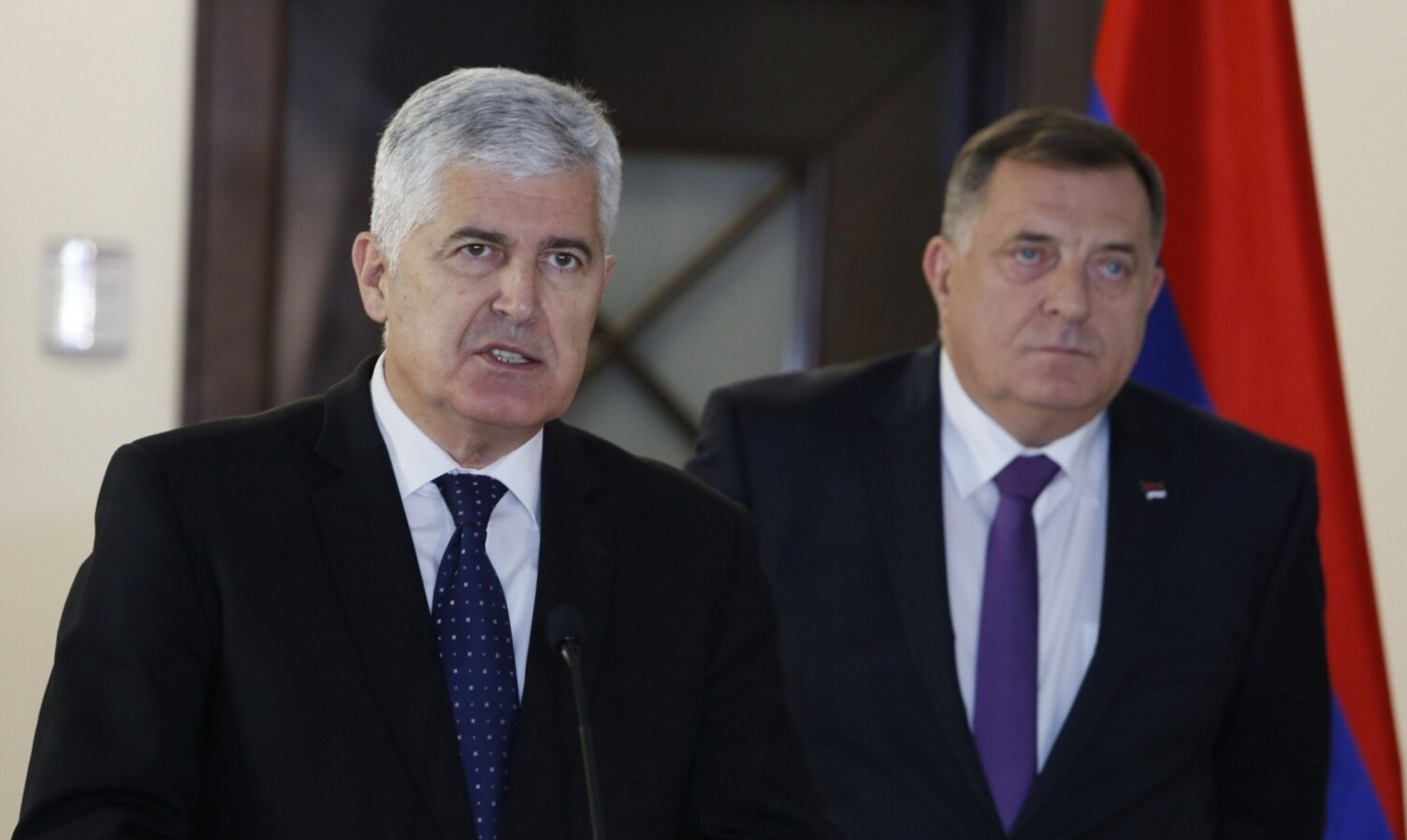
(Foto: FENA)
Kenan Efendić
11.06.2026. 08:30
The agenda was to contain a single item: the law on salaries of employees in the institutions of Bosnia and Herzegovina — civil servants, police officers, soldiers — not parliamentarians. The law has already been adopted in both houses of the State Parliament, but in differing versions, and the required harmonization would resolve a chronic problem: salaries would increase even when the state budget fails to be adopted. And into such situations we are regularly driven not only by Čović but, more often, by his strategic political partner, Milorad Dodik.
The HDZ delegates, however, informed the chairman, Kemal Ademović, that due to previously assumed obligations they could not attend before June 16, and kindly requested that he schedule the session for June 16, in the afternoon hours. On that day, the chairmanship of the House passes to — Dragan Čović.
[NOTE: Contrary to their prior announcement, two of the delegates did attend the session after this article was published and voted in favor of the amendments to the law.]
Since in politics, as in life and business, good will is demonstrated by deeds rather than sweet talk, Čović's honeyed words are tested against reality every day. Above all where that reality is shaped by HDZ cadres and sympathizers.
Football riots and brawls have been suspiciously regular in Herzegovina this year. In an atmosphere of violence and a climate of discrimination against Bosniaks in Stolac and Čapljina, alongside the trafficking in state property in Mostar, every statement Čović makes about relaxation rings out as an ugly provocation.
The deliberate and irrational stoking of tensions is spilling over from Herzegovina into the towns of central Bosnia dominated by the HDZ. The bans on communal public viewing of Bosnia and Herzegovina national team matches in Vitez and Kiseljak are merely the latest spasms.
To the background hum of relaxation, Čović consistently offers his own roadmap to better relations: Bosniaks should stop electing the Croat member of the Presidency. The two-decade narrative of so-called legitimate representation is evidently a strategic political demand not only of the HDZ but of nearly the entire Croat intellectual and political spectrum: from the far-right to the Franciscans.
It is, to be sure, a good thing that the HDZ states its fundamental demand plainly. But framed this way, it testifies that Dragan Čović interprets the Bosniak-Croat impasse exclusively as a consequence of Bosniak political decisions.
One of the key pillars of the ongoing political crisis in Bosnia and Herzegovina is the strategic partnership between the HDZ and Milorad Dodik's SNSD.
It is precisely here that Dragan Čović has a perfect, generational opportunity to relax not only Bosniak-Croat relations but to reshape the political landscape and the prospects of the state itself.
Let the HDZ, for a start, vote on one important issue in the interest of the state rather than of Republika Srpska — it will do more for him than any number of statements.
Let Dragan Čović, then, renounce the Balkans' leading destructive force, Milorad Dodik, if only for a single day. After that, he is welcome to offer relaxation once again — to the SDA, to the Troika, to the Reis-ul-ulema, to Edhem Bičakčić, and to the Bosniak public.
As long as Milorad Dodik, courtesy of Dragan Čović, goes on relaxedly undermining the constitutional order and the security of the state and the region, there will be no relaxation between Bosniaks and Croats.
O autoru
Kenan Efendić
Glavni i odgovorni urednik portala !Odgovor. Radio kao novinar i urednik u nekoliko bosanskih i međunarodnih medija („Radiosarajevo“, CIN, OCCRP, „Balkan Insight“), te kao urednik i prevodilac u izdavaštvu i konsultant u neprofitnom i međunarodnom sektoru. Završio Gazi Husrev-begovu medresu, studije književnosti i jezika te komunikologije.
Više od istog autora