The recent ouster of Christian Schmidt as BiH’s High Representative, widely seen as orchestrated by the U.S. in coordination with Bosnian Serb secessionist strongman Milorad Dodi, has reanimated the long-simmering question of the administration of country’s vast public lands and properties. These have existed in a kind of legal limbo since the end of the Bosnian War, and the resolution of their status is a pre-requisite both for the closure of the Office of the High Representative (OHR), the so-called 5+2 Agenda, and BiH’s NATO and EU accession aspirations.
Spelling out the Solutions to Bosnia’s Property Law Deadlock
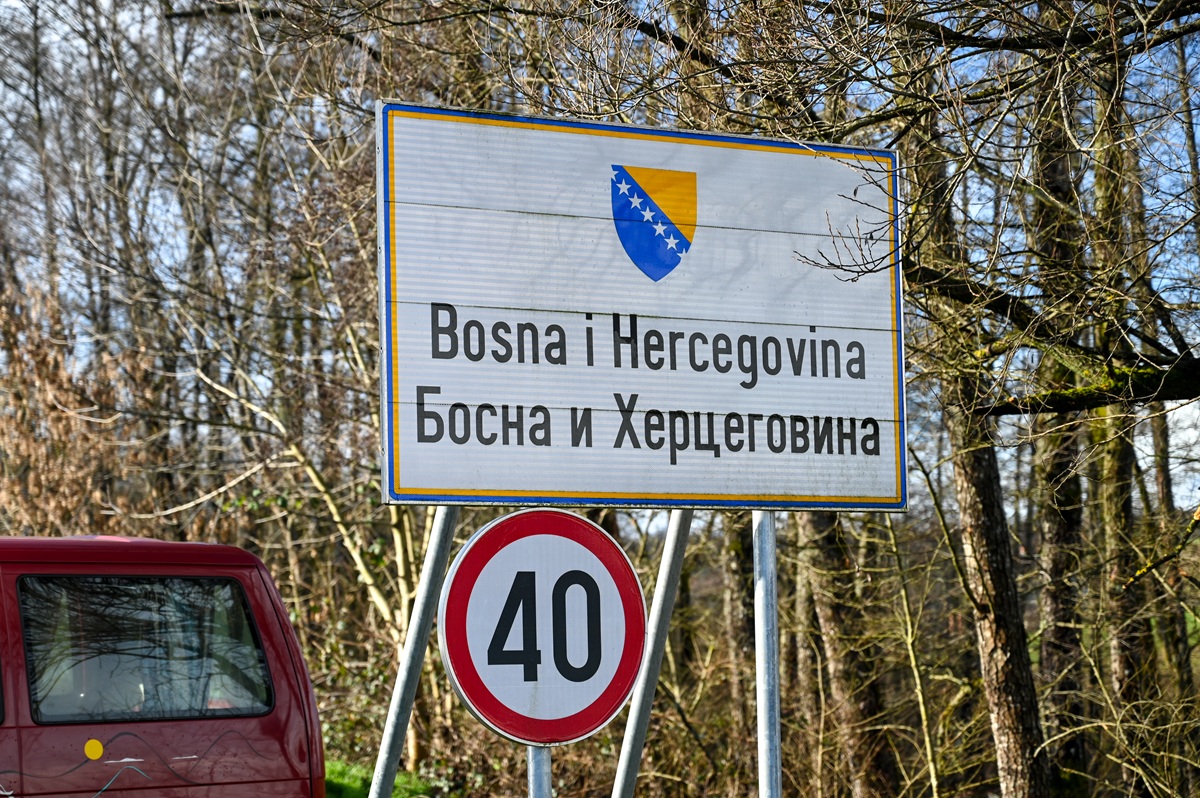
Foto: Ajdin Kamber / Fotobaza
Jasmin Mujanović
30.05.2026. 03:03
Yet pro-Bosnian political actors have systematically refused to publicly (or, as best we can tell, privately) articulate a coherent position on the issue. With a handful of noteworthy exceptions, Bosnian civil society and academia has likewise failed to offer concrete policy solutions. As a result, it has fallen to others to shape the debate. Chief among these have been the secessionist forces in the RS entity and, to a marginally lesser extent, their allies in the separatist HDZ BiH.
This situation is untenable. Especially for any political actor or movement in Sarajevo which claims to advocate on behalf of the interests of the Bosnian state, and its statehood as such.
An inability to articulate a basic political program in general and specifically with respect to one of the most important legal questions of the day is a categorical failure. It is akin to claiming to be a professional footballer and then being unable to lace one’s own boots.
So, what might a state property law, aligned with the long-term democratic and political interests of BiH and its advocates, look like?
The most obvious sources of inspiration are other democratic polities with broadly decentralized political regimes, in which ethnic, linguistic, and/or territorial interests are balanced with those of the central state. Each has their own model of distributing and administering state properties and public lands, but they all share a few basic principles, and these are therefore likewise pertinent for BiH.
First, all these states base their public administration regimes, to one extent or another, on pre-existing legal obligations which their respective polities inherited in realizing their contemporary statehood and/or sovereignty. Germany’s constitution, for example, references the German imperial era (Article 134), whereas India’s constitutional land management regime (Section 295) was built on the legal precedent of the British colonial period.
For BiH, that question was settled through the ratification of the 2001 Agreement on Succession Issues of the Former Socialist Federal Republic of Yugoslavia (SFRY), Article 1 of Annex A which reads “the movable and immovable State property of the federation constituted as the SFRY…shall pass to the successor States”. As BiH is the only signatory to the document within its local context – i.e. no sub-national units such as entities or cantons had or have the authority to enter into international agreements of this sort – it is the singular authority to which all former Yugoslav state properties and those of the Socialist Republic of Bosnia and Herzegovina on its present-day territory legally default to. It may presently lack a legislative regime to administer these properties but, legally, it claims exclusive title over the same.
Second, all states base their respective public land administration regimes on the idea that there are some properties and natural resources which must be controlled by the state because its administration is necessary to the basic functions of the state. The universal example of which is national defense. Thus, relevant military assets – i.e. military bases, and similar “immovable properties” – must be under sole administration of the state. As BiH’s Constitutional Court has ruled similarly, and as BiH likewise has a Defense Ministry, and Armed Forces of its own, the same principle naturally must apply therein too.
In practice, this also extends to the management of international borders, including air space, and natural resources like rivers and waterways (and what the BiH Constitutional Court calls “general goods”) which either constitute a state’s natural borders, and/or are held in common by the state and its citizens. Indeed, one could argue that all competencies which presently fall under the administration of the BiH state, as represented by the respective portfolios of the Council of Ministers, must have a corresponding expression in the form of state properties (e.g. the Ministry of Justice must have its facilities in Sarajevo, Banja Luka, Mostar, Livno, Trebinje etc. and the same must be true of all other ministries as well).
Third, regardless of whether a state is federal, unitary, or some admixture of the two (as BiH is), there is always some degree of local administration of territory and its resources and/or properties located on it. That may occur through administrative units such as provinces, cantons, districts, municipalities etc. but unless land is specifically reserved for use by the state it is generally local authorities which administer them. How they administer them and the degree of exclusive authority they have to do so, varies but there is always some degree of local rule, even if the latter is vested exclusively in the form of private property.
Taken together, this means: the state of BiH is, at present, the sole legal owner of all former republic-level and federal-level properties and lands which it inherited from the SFRY; the BiH Constitutional Court has already specified that certain immoveable properties must remain wholly owned by the state even if legislation is adopted to otherwise distribute the remaining properties among sub-national governments; and some degree of local ownership and/or management of public lands is a near universal norm.
From this point there are a legion of legislative frames which could be adopted to resolve the issue but the majority of these are purely fantastical because they would be unacceptable to this or that political camp which exercises practical veto power (which is why the matter has remained unresolved for the three decades).
The question is thus what is the minimum acceptable legal-political format for a state property law which will allow for the appropriate distribution and management of all relevant public lands and properties in BiH, which will fulfill the OHR’s 5+2 Agenda, as well as the conditions of the EU acquis and the NATO accession protocol?
This text cannot substitute for legislation which can only be drafted by BiH’s democratic political representatives. But it follows from all existing legislation and relevant international frameworks, including BiH’s present constitutional regime (i.e. Article I, Section 1), that the fact of BiH’s statehood, and thus its legal claim to all state properties, absent an alternative legislative framework, is immutable. It also follows, as previously noted, that certain categories of property must remain administered by the state (e.g. military installations, airspace, rivers and associated bodies of water, including the country’s maritime possession etc.). These two principles must be the proverbial red lines for political leaders in Sarajevo; clearly articulated and buttressed by the overwhelming preponderance of legal precedent on their side.
It is with respect to the question of local administration of the remaining lands and properties that pro-state actors have flexibility to negotiate with leaders in Banja Luka, and other local centers of power. Whether these are administered through some sort of rental agreement (i.e. that they remain legally owned by the state but functionally administered by sub-national governments, presumably in exchange for some kind of levy or tax); or a form of subsidiarity (i.e. that unless otherwise stated under Bosnian law, the possession and administration of public lands will default to the lowest level of government, i.e. municipalities, which may then transfer said ownership to other levels of government); or specific allocation (i.e. clearly articulated division of each and every state property); or a combination of all of the above, all of that is a matter of political negotiation.
In sum, what is required and possible is i. confirmation of the state’s title to all inherited SFRY property in BiH; ii. enumeration of inherent and specific state property categories (defense, borders, natural commons, international infrastructure etc.); iii. a mechanism for the distribution of the remaining lands and properties, whether through a rental method, subsidiarity, specific allocation, or a hybrid of the same; and iv. confirmation of the Constitutional Court as final arbiter for disputes. Points i. and iv. are politically and legally already resolved, whatever Dodik et al may claim. Point ii. has not been legislated but naturally follows from point i. and thus cannot, meaningfully, be politically challenged (i.e. some categories of state property must, by definition, exist). Hence, all the political weight rests, in truth, only on the precise modalities of point iii.
That is no small feat, sure, but the first and most meaningful step towards its resolution is drafting legislation. Specific proposals must be put to paper, and political power mustered towards its realization. It is insufficient for pro-Bosnian politicians to merely announce what they are against, the must be for something too: they must have a concrete, actionable agenda with which they can negotiate with rival political factions, and with the international community which, for better or for worse, continues to wield outsized influence in BiH. Not just because the issue is evidently coming to a head presently but because 2026 is an election year, and Bosnian voters deserve the right to decide over the future of this critical debate through clearly articulated programs by each of their prospective representatives.
Suffice it to say, the fact that even the elementary legal-political reflections in this text have rarely, if ever, been publicly articulated by any relevant political figure or party from Sarajevo over the past thirty years is negligence of the highest order, which has directly and demonstrably harmed the basic security and integrity of the state.
O autoru

Jasmin Mujanović
Jasmin Mujanović je bosansko-američki politolog, autor nekoliko knjiga.
Više od istog autora