There is no mitigating the categorical political win(s) secured by Milorad Dodik during his recent visit to Washington, DC and most disturbingly his accompanying stay at the White House. Efforts by Bosnian officials to downplay the significance of Dodik’s presence in the American capital, and his and his team’s meetings with senior Trump administration officials, are misguided. Even comical.
A Reckoning for Bosnia: Four Steps to Rebuild Its Diplomacy
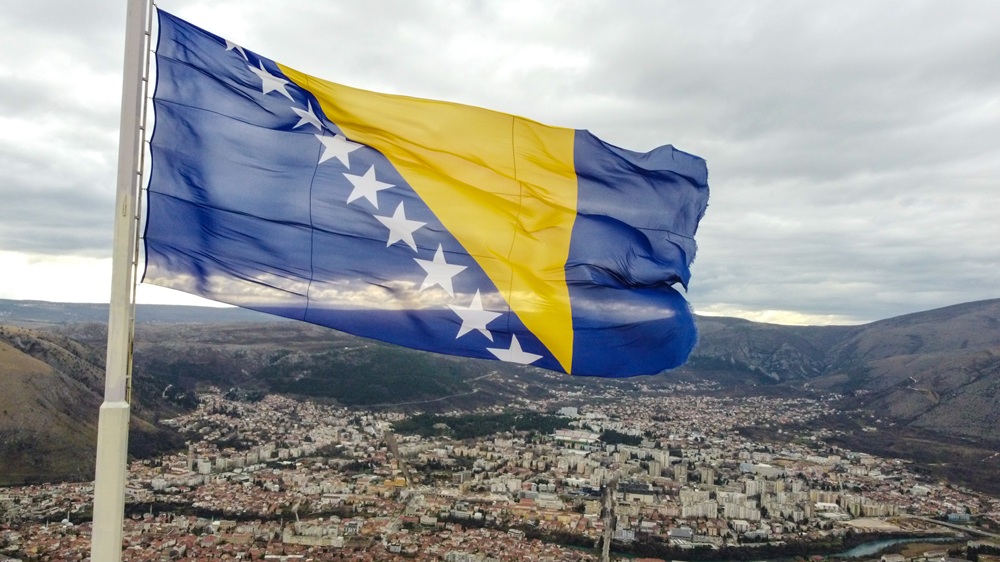
Ajdin Kamber / Fotobaza
Jasmin Mujanović
14.02.2026. 04:59
Ovaj tekst dostupan je i na bosanskom jeziku
The truth is Dodik’s access to the Trump administration, combined with the steadfast support he enjoys from Viktor Orban, Vladimir Putin, and the government of Benjmain Netanyahu is profoundly dangerous for Bosnia and Herzegovina, its sovereignty, and territorial integrity. A state which, as I explained in 2022, has not a single genuine ally of its own, a fact which its senior own officials – in government and in the opposition alike – have done nothing to remedy in the nearly decades since the end of the war.
For anyone remotely concerned with the welfare of Bosnia and Herzegovina, whether they are a citizen, part of its diaspora, or one of its few foreign friends and sympathizers, the present moment is one of great urgency.
There is no shortage of blame for the present state of affairs, both the current government(s) in Sarajevo and their predecessors have each demonstrated exceeding levels of incompetence and ignorance at nearly every critical juncture in the country’s modern history. But as cathartic as it might be to sit around the bar, naming names, and dropping epithets now is the time for a coordinated response in defense of the basic integrity and security of the Bosnian state. Not political point scoring.
A concrete program to right the country’s course must be adopted. That program will not be immediately successful and regardless of what is done today or tomorrow, the political and security position of Bosnia and Herzegovina is likely to deteriorate in the near term. That is the consequence of decisions taken yesterday, a year ago, and ten years ago before that.
But strategic decisions made today may pay off in five or fifteen years. For there to be any chance of that, however, decisive action is needed, now.
First, the present moment must be recognized as a crisis, and all relevant political actors in Sarajevo must respond accordingly. That means putting aside partisan bickering, and personal animosities.
Second, a skeletal program of collective must be agreed between the relevant parliamentary and political actors, the focus of which must be the basic defense of the state’s sovereignty and territorial integrity; the functionality of its security and intelligence organs and their staffing by individuals committed to the constitutional order and the rule of law; and a unified posture towards the international community.
That final point means not only well-worn commitments to the country’s Euro-Atlantic aspirations but a clear commitment to the categorical defense of the country’s constitutional order, and that any amendments to the same can only occur through the democratic institutions of the state, and the democratic consent of the Bosnian public.
Third, the contents of that skeletal agreement must be communicated clearly to the Bosnian public and to its international partners. It must be clear that this is the joint position of all pro-state elements in the country, in government and in the opposition alike.
Fourth, the structural inability of the Bosnian state to engage in rational diplomacy must be recognized, and resolved, to the greatest extent possible. Non-partisan funds must be established – whether through the cantons, the municipalities, or private sources – which will have as their exclusive aim the promotion of Bosnia and Herzegovina’s strategic and political interests in the international arena, regardless of who is in power in Sarajevo.
These funds must be used to promote Track II diplomatic initiatives, to promote Bosnian cultural and sports diplomacy, ensure the country’s representation at all relevant international diplomatic and economic fora, and to secure placement for Bosnian students, scholars, musicians, entrepreneurs, and athletes in the most prestigious institutions and organizations within their respective fields. And, finally, a portion of those funds must be used to ensure the permanent political and diplomatic representation of Bosnia and Herzegovina’s interests in key capitals, regardless of the composition of the Ministry of Foreign Affairs or the presidency.
This permanent political and diplomatic representation cannot and must not be pursued by the Bosnian diaspora. This is neither politically nor, in most cases, legally possible. The diaspora can be leveraged through any number of initiatives – including the promotion of re-settlement programs – but they cannot be lobbyists on behalf of the Bosnian state. That idea must be abandoned.
Instead, professional advocacy and public relations firms – in Washington, London, Brussels, Berlin, Paris and elsewhere – must be hired through these funds and provided with a clear set of aims. Presently, for instance, the most obvious ask is the re-imposition of U.S. sanctions against Dodik and his regime, and the expansion of the same within the member states of the EU.
The integrity of the fund (or “trust”) can be maintained by a foreign fiduciary or accounting firm, while its local administration can be ensured by a board of elder statesmen who have are outside of the fray of day-to-day politics, but whose commitments to Bosnia and Herzegovina’s statehood are beyond reproach. Individuals such as Miro Lazovic, Haris Siljadzic, Jakob Finci, Bogic Bogicevic, and others.
This should not have to be explained or advocated for. This is an approach that is self-evident and should have become the norm decades ago. It has even been explained to Bosnian officials by their foreign counterparts, who have on more than one occasion expressed their shock at the absence of these elementary diplomatic and political programs by generations of decision-makers in Sarajevo.
What’s done is done though. And all that matters now is whether there is enough intellectual and political capacity within the Bosnian political class – and those who elect them – to steer a deft course through the coming storm.
O autoru

Jasmin Mujanović
Jasmin Mujanović je bosansko-američki politolog, autor nekoliko knjiga.
Više od istog autora